Computer vs paper IELTS in 2026: the differences, and where paper has ended
Last verified 6 October 2026 · 5 min read · ieltspractice.app
Quick answer
Computer and paper IELTS have the same questions and scoring; the difference is how you answer. On computer, you usually type your Writing and get no extra time to copy Listening answers. Paper IELTS has ended in Bangladesh, India and Nepal.
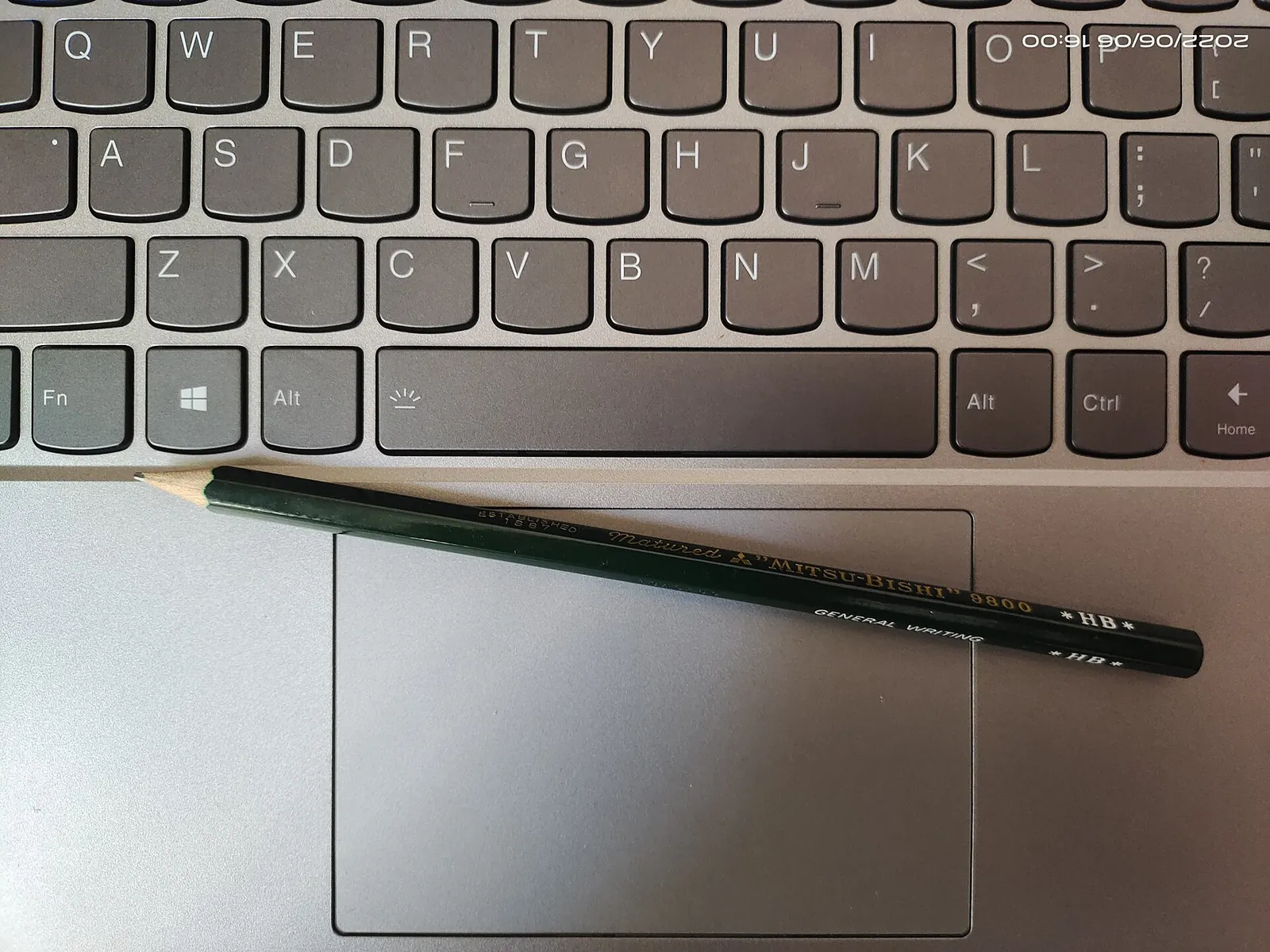
Photo: NH655 — Wikimedia Commons (CC BY-SA 4.0)
IELTS on computer vs paper vs Writing on Paper
This guide compares three ways to take IELTS. IELTS on computer is the normal test now, and IELTS on paper has mostly ended. With Writing on Paper, an option inside the computer test, you handwrite only your Writing answers.
In all three, Speaking is a face-to-face talk with an examiner. For how the computer test works, read our complete guide to computer-delivered IELTS.
| Part of the test | IELTS on computer | IELTS on paper (ending) | Writing on Paper |
|---|---|---|---|
| Listening and Reading | On screen: you type or click your answers | On an answer sheet, in pencil | Same as on computer |
| Listening answers | No transfer time; 2 minutes at the end to check | Extra time at the end to copy answers onto the answer sheet | Same as on computer |
| Writing | You type; an on-screen word count helps you | You write by hand, in pen or pencil | Tasks on screen; you write by hand in pen on an answer sheet |
| Paper you get | The login details sheet for notes, and rough paper in Listening | The question booklet and the answer sheet | Same as on computer, plus a Writing Answer Sheet |
| Questions and scoring | The same in all three | The same in all three | The same in all three |
| Test dates | IDP Bangladesh: up to 3 times a day, 7 days a week | Fewer dates than on computer, IDP says | IDP Bangladesh: slots up to 7 days a week |
| Results | 1–5 days after the test | Typically 13 calendar days | Within 5 days |
Sources (11)
Listening: no transfer time on computer
This is the biggest practical difference. On paper, you wrote your answers on the question paper while you listened. At the end, you had extra time to copy them onto the answer sheet. This is called transfer time.
On computer, you type each answer while you listen, so there is no transfer time. IDP, one of the organisations that run IELTS, says the computer Listening test is 10 minutes shorter for this reason. You get 2 minutes at the end to check your answers.
So on computer, type the answer at once and spell it correctly the first time. Do not plan to fix it later. The Listening test still has 4 parts and 40 questions, takes about 30 minutes, and you hear each recording only once. For more help, read how to improve your IELTS Listening score.
Writing: typing or handwriting
On computer, you type your Writing answers. An on-screen word count shows how many words you have written, and you can copy and paste. Check the length of a practice answer with our IELTS word counter.
If you prefer to write by hand, ask about Writing on Paper. The tasks appear on the screen, but you answer in pen on an IELTS Writing Answer Sheet. The tasks, the time and the scoring are the same as when you type.
Writing on Paper is offered only in selected countries. IDP India says it is available in India from 1 September 2026, and IDP Nepal says it is available in Nepal from 1 July 2026. IDP Bangladesh has a Writing on Paper page but gives no start date.
We did not find it on the British Council Pakistan or IDP Pakistan websites, so ask your test centre. It is not available for IELTS for UKVI, the test you take for a UK visa. See Writing on Paper vs typing for the country table.
Is the computer test harder?
No. IDP says the content, the timing of each part, the question types and the scoring are the same on paper and on computer. IDP Bangladesh also says Listening and Writing are not harder on computer: the difficulty level is the same.
Your result is reported the same way, as a band from 0 to 9 for each skill and an overall band.
The real change is how you answer. So practise reading on a screen, typing your essays and using a timer. To learn the buttons, read our guide to IELTS computer test tools and keyboard shortcuts. Before test day, try IDP’s familiarisation tests, free practice versions of the computer test.
Which should you choose?
In Bangladesh, India and Nepal, paper IELTS has ended. So your real choice is between typing your Writing and Writing on Paper, where your test centre offers it.
If you need IELTS for UKVI, you must type, because Writing on Paper is not available for that test. If you type slowly, check your speed with our free IELTS typing test and practise. To compare the two options in detail, read Writing on Paper vs typing.
Has paper IELTS ended?
In most places, yes. In March 2026, IELTS said that from mid-2026 it would no longer offer IELTS on paper. It also said the exact timing would be different in each country.
So there is no single end date. IDP and the British Council run IELTS tests in these countries, and the table shows what their websites say today.
If you took IELTS on paper before, your result is still fine. IELTS says it stays valid for the recommended two years. See how long your IELTS result is valid for the rules of each country.
| Country | Paper IELTS | What the official website says |
|---|---|---|
| Bangladesh | Ended after 31 Jan 2026 | IDP Bangladesh: IELTS on paper is no longer offered after 31 January 2026. |
| India | Ended (no date given) | IDP India: “IELTS on Paper has been discontinued.” Writing on Paper is available from 1 September 2026. |
| Nepal | Ended after 27 Jun 2026 | IDP Nepal: IELTS on paper is no longer offered after 27 June 2026. |
| Pakistan | Only with special approval on medical grounds | British Council Pakistan: paper is only for candidates with special approval on medical grounds. No end date is given. |
When did paper IELTS end in India and Pakistan?
IDP India’s website says only that IELTS on paper “has been discontinued”. It does not give a last test date, so we do not give one either. Some news sites print dates, but we could not find them on an IDP page.
In Pakistan, the British Council says paper is only for candidates with special approval on medical grounds, such as hearing, visual or speaking disabilities. Other British Council candidates take IELTS on computer. The British Council gives no end date for this rule.
Bangladesh: last paper date
IDP Bangladesh says IELTS on paper is no longer offered in Bangladesh after 31 January 2026.
IELTS announces the change
IELTS says that from mid-2026 it will no longer offer paper tests. The timing is different in each country.
Nepal: last paper date
IDP Nepal says IELTS on paper is no longer offered in Nepal after 27 June 2026.
Nepal: Writing on Paper starts
IDP Nepal says Writing on Paper is available in Nepal from 1 July 2026.
India: Writing on Paper starts
IDP India says IELTS on paper has been discontinued. It gives no last date. Writing on Paper is available in India from 1 September 2026.
Frequently asked questions
What is the difference between computer and paper IELTS?
The questions, the timing of each part and the scoring are the same. On computer, you type or click your answers and get 2 minutes to check Listening instead of extra transfer time. Results also come faster: IELTS says 1–5 days on computer.
Can I still take IELTS on paper in 2026?
Not in Bangladesh, India or Nepal: paper IELTS has ended there. In Pakistan, the British Council keeps paper only for candidates with special approval on medical grounds. Other British Council candidates there take IELTS on computer.
Did paper IELTS end worldwide in June 2026?
IELTS has not said that. In March 2026 it said paper tests would end from mid-2026, with different timing in each country. For example, paper ended in Bangladesh after 31 January 2026 and in Nepal after 27 June 2026.
When did paper IELTS end in India?
IDP India says IELTS on paper has been discontinued, but its website gives no last test date. It offers Writing on Paper in India from 1 September 2026 (IDP Nepal offers it from 1 July 2026), where you take Listening and Reading on computer and handwrite your Writing.
Is the computer IELTS harder than the paper IELTS?
No. IDP says the content, timing, question types and scoring are the same. IDP Bangladesh also says Listening and Writing are not harder on computer. Only the way you answer is different, so practise typing and reading on a screen before your test.
Is there transfer time in IELTS Listening on computer?
No. You type each answer while you listen, so there is no time to copy answers at the end. You get 2 minutes to check your answers instead.
Is my old paper IELTS result still valid?
Yes. IELTS says paper results stay valid until the end of the recommended two-year period. The organisation you apply to decides how old a result it accepts.
Can I choose Writing on Paper for a UK visa?
No. IELTS says Writing on Paper is not available for IELTS for UKVI, the test for UK visas. For that test, you type your Writing on the computer.
Sources
- IELTS: Updates to IELTS test delivery (5 March 2026)
- IELTS: Ways to take IELTS
- IELTS: Updates to IELTS Writing test delivery mode (Writing on Paper)
- IDP IELTS Bangladesh: IELTS on paper
- IDP IELTS Nepal: IELTS on paper
- IDP IELTS Nepal: IELTS on Computer vs IELTS on paper
- IDP IELTS India: home page notice on IELTS on Paper
- IDP India: IELTS Writing on Paper in India (blog)
- IDP IELTS Nepal: IELTS Writing on Paper
- IDP IELTS Bangladesh: IELTS Writing on Paper
- British Council Pakistan: IELTS test dates and locations
- IDP IELTS Bangladesh: IELTS on Computer
- IDP IELTS: How IELTS on computer works
- IDP IELTS Bangladesh: Listening preparation for IELTS on Computer
- IDP IELTS Bangladesh: Writing preparation for IELTS on Computer
- IDP IELTS India: How to use IELTS on Computer features to your advantage
- British Council Nepal: Writing on Paper
- British Council Pakistan: IELTS
- IDP IELTS Pakistan
Facts on this page last checked against these sources on 6 October 2026.
Keep reading
Independent IELTS preparation. ieltspractice.app is not affiliated with IDP, Cambridge English, or the British Council.